Spring preparation
Planned around the site, the season and the care available after handover.
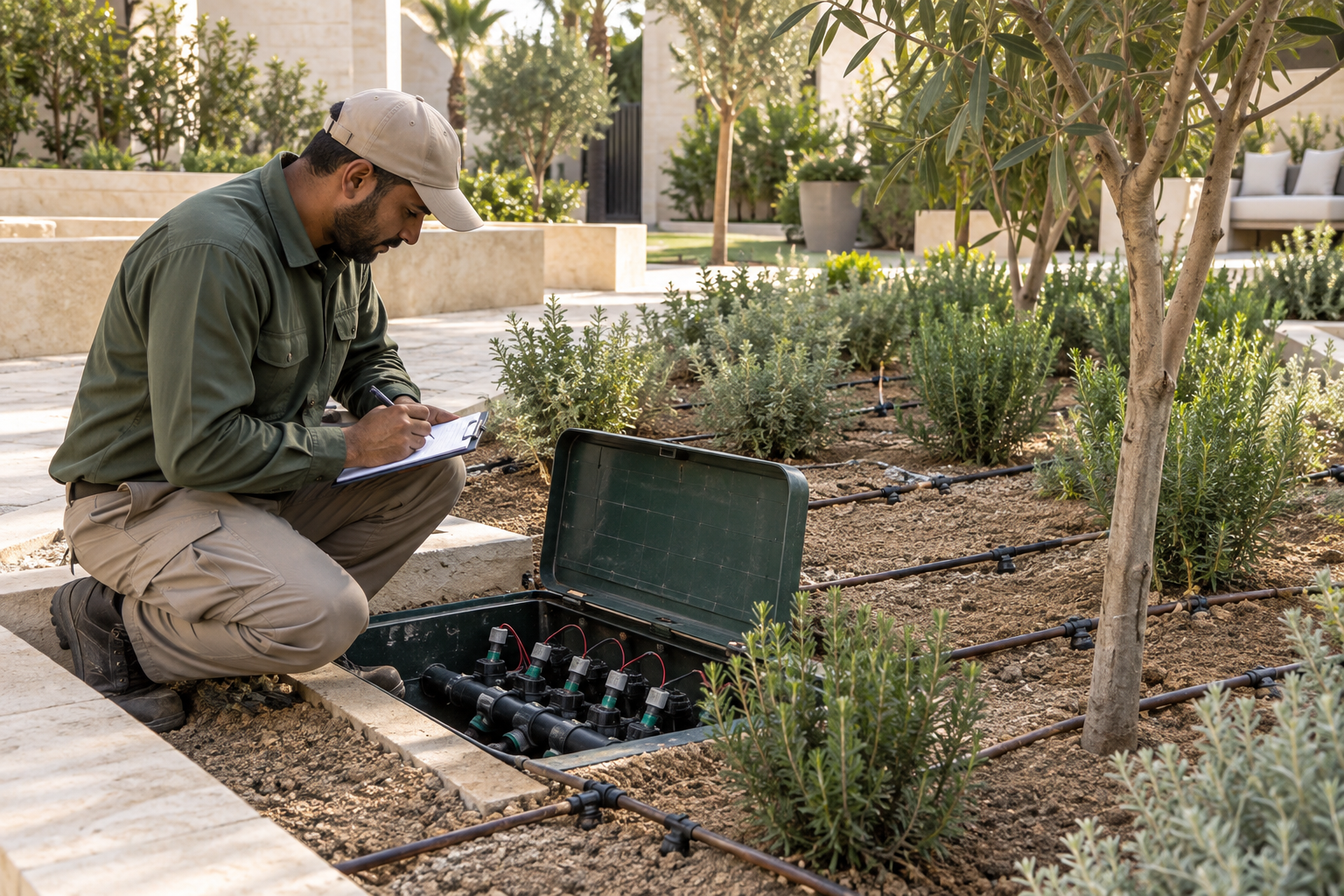
Monthly visits focus on pruning, irrigation checks, soil condition and the next seasonal change.
Planned around the site, the season and the care available after handover.
Planned around the site, the season and the care available after handover.
Planned around the site, the season and the care available after handover.
Planned around the site, the season and the care available after handover.
A maintenance visit starts with observation: soil moisture below the surface, emitter performance, leaf condition, fresh growth and signs of pests or mechanical damage. The crew then works through agreed priorities rather than cutting every plant into the same shape. Selective pruning preserves natural form, keeps paths open and removes weak growth before it becomes a larger problem.
Seasonal adjustments are documented. Hot-weather irrigation is increased carefully by duration or frequency according to soil and plant response, not by leaving every zone running longer. Cooler months create opportunities for transplanting, soil improvement and structural pruning. Replacement recommendations explain whether a loss came from establishment, irrigation, exposure or an unsuitable species. That distinction prevents the same plant from being installed into the same failing condition.
The working material is scaled to the assignment: annotated observations for a care visit, outline layouts during design, and coordinated planting and irrigation information when installation is included. Recommendations name priorities and dependencies, so optional improvements do not look like urgent corrections. Site access, protection, waste removal and responsibility for existing services are confirmed before work begins.
Local conditions can alter the sequence. Dusty wind, exceptional heat, restricted compound hours or a delayed nursery delivery may make a short reschedule better than forcing work into an unsuitable day. The project contact is told what changed, why it matters and what the revised next step will be.